1. Introduction: The Evolution and Science of Hatha Yoga
The practice of Hatha Yoga, while rooted in the medieval traditions of the Indian subcontinent, has undergone a profound transformation to become the predominant form of postural physical culture in the modern world. Historically, texts such as the Hatha Yoga Pradipika (15th century) and the Gheranda Samhita (17th century) codified specific asanas (postures) not merely as physical exercises, but as methods to purify the body’s energy channels (nadis) and prepare the physical vessel for the rigors of prolonged meditation.
Contemporary Hatha Yoga retains this spiritual DNA but has expanded its scope through the integration of modern kinesiology, anatomy, and therapeutic science. It is characterized today by a deliberate pace, the holding of static postures, and a rigorous focus on alignment, distinguishing it from the dynamic flows of Vinyasa or the repetitive rigor of Ashtanga.
From a physiological perspective, the efficacy of Hatha Yoga lies in its unique capacity to modulate the autonomic nervous system. Unlike purely aerobic exercises that may sustain sympathetic arousal (fight or flight), the isometric contractions and controlled respiration (pranayama) inherent in Hatha practice facilitate a shift toward parasympathetic dominance (rest and digest). Research indicates that this modulation improves heart rate variability (HRV), reduces cortisol secretion, and enhances emotional regulation. Furthermore, the mechanical stress applied to connective tissues during asana practice operates through mechanotransduction—the conversion of mechanical stimulus into chemical activity—promoting cellular repair, fascial hydration, and joint mobility.
This report provides an exhaustive analysis of the primary Hatha Yoga postures practiced globally today. Each entry synthesizes traditional methodology with modern biomechanical understanding, offering detailed step-by-step instructions, analysis of muscular engagement, research-backed therapeutic benefits, and specific visual directives for artistic illustration.
2. Foundational Standing Asanas
Standing postures serve as the architectural foundation of Hatha Yoga. They are designed to cultivate sthira (stability) and sukha (ease), teaching the practitioner how to ground through the lower extremities while extending the spine. These poses are essential for correcting postural deviations, building bone density, and establishing proprioceptive awareness.
2.1 Tadasana (Mountain Pose)
Sanskrit Etymology: Tada (Mountain) + Asana (Pose).
Biomechanics & Muscular Engagement: While appearing passive, Tadasana requires active isometric engagement. The agonists are the quadriceps (extending the knees) and the spinal extensors (lengthening the torso). The synergists include the gluteus maximus (stabilizing the pelvis) and the transverse abdominis (supporting the lumbar spine). The intrinsic muscles of the feet act as stabilizers, creating the foundational “root”.
Method of Practice: The practitioner begins by standing at the front of the mat, bringing the big toes to touch while keeping the heels slightly apart to align the second toes parallel. Alternatively, a hip-width stance is recommended for those with compromised balance. The weight is distributed evenly across the four corners of the feet: the mound of the big toe, the mound of the little toe, the inner heel, and the outer heel. The practitioner must actively lift the kneecaps by engaging the quadriceps, ensuring the knees do not hyperextend. The pelvis is neutralized by dropping the tailbone slightly toward the heels while drawing the lower abdomen inward. The shoulders are rolled up, back, and down, sliding the scapulae flat against the posterior ribs. The arms extend alongside the torso with palms facing forward to broaden the clavicles. The crown of the head lifts directly over the pelvic floor, keeping the chin parallel to the earth.
Therapeutic Benefits:
- Postural Correction: Tadasana is the antidote to the “text-neck” and kyphosis associated with modern sedentary lifestyles. It re-educates the body on neutral spinal alignment.
- Proprioception: It enhances the vestibular system’s ability to sense the body’s position in space, which is critical for fall prevention in elderly populations.
- Respiratory Health: The open chest alignment maximizes lung volume, facilitating diaphragmatic breathing.
2.2 Vrksasana (Tree Pose)
Sanskrit Etymology: Vrksa (Tree) + Asana (Pose).
Biomechanics & Muscular Engagement: This pose is a study in opposing forces. The agonists include the gluteus medius of the standing leg (preventing the hip from jutting out) and the external rotators of the lifted leg. The antagonists are the adductors of the standing leg, which must resist the pressure of the foot. The core acts as a vital stabilizer to manage the constant micro-adjustments of balance.
Method of Practice: From Tadasana, the practitioner shifts weight into the left foot, spreading the toes to create a wide base. The right knee bends, and the foot is placed on the inner left thigh, pressing the heel firmly near the groin. If balance is elusive, the foot may be placed on the calf, but never directly on the knee joint to avoid lateral ligament strain. The critical action is the mutual pressure: the thigh presses back into the foot as the foot presses into the thigh, creating a central line of energy. The pelvis remains square to the front. The hands meet at the heart or extend overhead like branches. The gaze (drishti) is fixed on a stationary point.
Therapeutic Benefits:
- Neuromuscular Coordination: Research indicates that balancing poses like Vrksasana stimulate the cerebellum and improve neuromuscular communication, reducing the risk of falls.
- Concentration: The demand for single-pointed focus quiets the fluctuations of the mind (chitta vritti).
- Hip Mobility: The external rotation opens the groins and strengthens the gluteal muscles.
2.3 Utkatasana (Chair Pose)
Sanskrit Etymology: Utkata (Fierce/Powerful) + Asana (Pose).
Biomechanics & Muscular Engagement: Utkatasana is an intense isometric strengthener. The agonists are the quadriceps and gluteus maximus, working against gravity to hold the squat. The synergists are the deltoids (lifting the arms) and the erector spinae (keeping the back straight). The antagonists include the hamstrings and rectus abdominis, which stabilize the position.
Method of Practice: Beginning in Tadasana, the practitioner inhales arms overhead, keeping them parallel. On the exhalation, the knees bend and the hips descend backward as if sitting in a chair. It is crucial that the knees remain parallel and do not collapse inward (valgus collapse); the weight is shifted into the heels so that the toes can lift slightly. The tailbone is directed down slightly to prevent excessive lumbar lordosis, while the chest remains lifted. The gaze is directed upward between the hands.
Therapeutic Benefits:
- Functional Strength: This pose builds essential strength for daily activities such as rising from a seated position, making it vital for aging populations.
- Cardiovascular Health: As a large-muscle exercise, it elevates heart rate and stimulates the circulatory system.
- Arch Support: The weight distribution lifts and strengthens the arches of the feet, correcting flat feet.
2.4 Virabhadrasana II (Warrior II)
Sanskrit Etymology: Named after Virabhadra, a fierce warrior incarnation of Shiva.
Biomechanics & Muscular Engagement: This pose is a hip opener requiring abduction and external rotation. The agonists are the quadriceps of the front leg and the abductors (gluteus medius) of both hips. The stabilizers are the core muscles, which prevent the torso from leaning forward. The arms require isometric endurance from the deltoids.
Method of Practice: The practitioner steps the feet 4 to 5 feet apart. The right foot turns out 90 degrees, while the left foot turns in slightly (approx. 15 degrees). The heels should align linearly. On an exhalation, the right knee bends until the thigh is parallel to the floor, stacking the knee directly over the ankle. The critical alignment cue is to press the right knee toward the little-toe side of the foot to prevent it from collapsing inward, which protects the ACL. The arms extend at shoulder height, reaching actively in opposite directions. The gaze fixes over the front fingertips.
Therapeutic Benefits:
- Hip Health: It promotes flexibility in the hip adductors and strength in the abductors, crucial for hip joint stability.
- Stamina: Builds endurance in the legs and shoulders without high-impact stress.
- Mental Focus: The posture embodies determination and is often used in therapeutic settings to build self-efficacy and confidence.
2.5 Utthita Trikonasana (Extended Triangle Pose)
Sanskrit Etymology: Utthita (Extended) + Trikona (Three Angle/Triangle) + Asana (Pose).
Biomechanics & Muscular Engagement: Trikonasana is a lateral flexion and rotation of the spine. The agonists are the quadriceps (keeping legs straight) and the obliques (supporting the torso). The antagonists are the hamstrings and adductors, which receive a deep stretch. The pose requires the “root to rise” mechanic where grounding the feet allows for spinal extension.
Method of Practice: From a wide stance similar to Warrior II, the practitioner straightens the front leg. The hips shift toward the back foot as the front arm reaches forward, maximizing the length of the lateral torso. The torso then pivots sideways at the hip joint—not the waist. The front hand lands on the shin, ankle, or a block placed outside the foot. The top arm extends vertically. The chest rotates toward the ceiling. A common error is collapsing the underside of the torso; the practitioner must visualize lengthening the bottom ribs to maintain spinal integrity.
Therapeutic Benefits:
- Spinal Health: The lateral stretch aids in decompressing the intervertebral discs and alleviating back pain.
- Hamstring Flexibility: It provides a safe, controlled stretch for the hamstrings, reducing risk of strain.
- Digestion: The subtle rotation and lateral compression massage the abdominal organs, aiding gastrointestinal motility.
3. Floor Asanas: Seated, Forward Bends & Hip Openers
Floor postures in Hatha Yoga move the focus from working against gravity to working with it. They reduce the cardiovascular demand, allowing the practitioner to focus on releasing tension in the connective tissues and calming the nervous system.
3.1 Paschimottanasana (Seated Forward Bend)
Sanskrit Etymology: Paschima (West/Back of body) + Uttana (Intense Stretch) + Asana (Pose).
Biomechanics & Muscular Engagement: This pose demonstrates the principle of reciprocal inhibition. To stretch the hamstrings (antagonist) effectively, the practitioner must engage the quadriceps (agonist). Engaging the quads signals the hamstrings to relax. The abdominals and psoas act as synergists to flex the hips.
Method of Practice: The practitioner sits in Dandasana (Staff Pose) with legs extended. If the lower back rounds, sitting on a folded blanket is advised to tilt the pelvis forward. On an inhalation, the arms reach overhead to lengthen the spine. On the exhalation, the torso hinges from the hip joints—not the waist—reaching forward for the feet. The goal is to lay the abdomen on the thighs first, then the chest, and finally the head. If the hands cannot reach the feet, a strap should be used around the soles to maintain a straight spine.
Therapeutic Benefits:
- Nervous System Regulation: Forward bends are clinically observed to be “cooling,” shifting the autonomic nervous system to a parasympathetic state, thereby reducing anxiety and blood pressure.
- Visceral Massage: The compression of the abdomen against the thighs stimulates the liver, kidneys, and pancreas, potentially aiding in blood sugar regulation for diabetics.
- Spinal Traction: Creates space between the vertebrae, offering relief for mild sciatica.
3.2 Gomukhasana (Cow Face Pose)
Sanskrit Etymology: Go (Cow) + Mukha (Face) + Asana (Pose).
Biomechanics & Muscular Engagement: Gomukhasana is a dual-action pose. The leg position involves deep external rotation and adduction of the hips, stretching the gluteus medius and piriformis. The arm position requires external rotation/flexion (top arm) and internal rotation/extension (bottom arm), mobilizing the rotator cuff complex.
Method of Practice: From a seated position, the left knee is bent and slid to the midline. The right knee crosses directly over the left, stacking vertically. The feet fan out to the sides, and the practitioner sits between the heels. The right arm reaches up, bends at the elbow, and reaches down the spine. The left arm reaches behind the back and reaches up to clasp the right fingers. If the hands do not meet, a strap is held between them. The chest must remain open, avoiding the tendency to round the upper back.
Therapeutic Benefits:
- Frozen Shoulder: This is a primary therapeutic intervention for restoring range of motion in the shoulder girdle.
- Sciatica: The hip stretch targets the piriformis muscle, which can alleviate sciatic pain caused by muscular compression.
- Posture: Opens the chest and counters the kyphotic slump associated with computer work.
3.3 Baddha Konasana (Bound Angle / Butterfly Pose)
Sanskrit Etymology: Baddha (Bound) + Kona (Angle) + Asana (Pose).
Biomechanics & Muscular Engagement: This pose primarily targets the adductor group (inner thighs). The external rotators of the hip (gluteus maximus/medius) function as agonists to draw the knees down. The erector spinae must engage to prevent the lower back from collapsing backward.
Method of Practice: Sitting tall, the practitioner bends the knees and brings the soles of the feet together, pulling the heels as close to the perineum as is comfortable. The outer edges of the feet press into the floor. The hands grasp the feet, gently opening the soles upward like a book. The knees are actively pressed toward the floor using hip strength, not hand pressure. For a deeper variation, the practitioner may hinge forward with a flat back.
Therapeutic Benefits:
- Reproductive Health: Traditional texts and modern yoga therapy recommend this pose for optimizing circulation to the pelvis, ovaries, and prostate gland, aiding in menstrual irregularities and urinary health.
- Fatigue: Considered a restorative pose that relieves fatigue from long hours of standing.
4. Twisting Asanas
Twists are unique to yoga, offering a “squeeze and soak” mechanism for the spinal column and internal organs. They are essential for maintaining the rotational mobility of the vertebrae and hydrating the intervertebral discs.
4.1 Ardha Matsyendrasana (Half Lord of the Fishes)
Sanskrit Etymology: Named after the sage Matsyendra.
Biomechanics & Muscular Engagement: The abdominal obliques are the primary movers for the rotation. The paraspinal muscles (multifidus) stabilize the vertebrae. The arm pressing against the leg creates a closed kinetic chain, allowing for passive leverage to deepen the active twist.
Method of Practice: The practitioner sits with the left leg bent, heel near the right buttock. The right foot crosses over the left knee, planting firmly on the floor. The right hand is placed behind the sacrum to act as a “second spine,” propping the torso upright. On an inhalation, the left arm lifts; on the exhalation, the torso twists to the right, hooking the left elbow outside the right knee. With each inhalation, the spine lengthens; with each exhalation, the twist deepens.
Therapeutic Benefits:
- Disc Health: The rotational force rehydrates spinal discs by squeezing out stale fluid and allowing fresh nutrients to soak in upon release.
- Digestion: The pressure of the thigh against the abdomen massages the ascending and descending colon, promoting peristalsis and relieving constipation.
4.2 Bharadvajasana I (Bharadvaja’s Twist)
Sanskrit Etymology: Named after the sage Bharadvaja.
Biomechanics & Muscular Engagement: Unlike deeper twists that lock the pelvis, Bharadvajasana allows some movement in the hips, making it safer for the lumbar spine. The rotation is focused primarily in the thoracic spine (upper back), which is anatomically designed for rotation.
Method of Practice: The practitioner sits and swings both legs to the left side, placing the feet beside the left hip. The left shin rests in the arch of the right foot. Inhaling to lift the chest, the practitioner exhales and twists to the right. The left hand grasps the right knee, while the right hand moves behind the back, potentially clasping the left elbow. The gaze turns over the right shoulder.
Therapeutic Benefits:
- Lumbar Safety: Because the twist is open and the pelvis can move slightly, this is the preferred twist for individuals with lower back issues or herniated discs.
- Stress Relief: The gentle rotation releases tension in the diaphragm and intercostal muscles, aiding deeper breathing.
5. Backbends (Heart Openers)
Backbends in Hatha Yoga are energizing postures that counteract gravity. They strengthen the posterior chain (back body) while stretching the anterior chain (front body). Psychologically, they are associated with extroversion, courage, and mood elevation.
5.1 Bhujangasana (Cobra Pose)
Sanskrit Etymology: Bhujanga (Serpent/Cobra) + Asana (Pose).
Biomechanics & Muscular Engagement: The primary workers are the erector spinae and multifidus muscles of the back. The gluteus maximus anchors the pelvis. It is crucial not to use arm strength to crank the back, but rather to use back strength to lift the spine. This strengthens the back extensors.
Method of Practice: Lying prone, the practitioner places hands under the shoulders. The tops of the feet press firmly into the mat. On an inhalation, the practitioner peels the chest off the floor using back muscles. The pubic bone remains grounded. The elbows hug the side body. The neck remains long, avoiding the “turtle” hunching of shoulders.
Therapeutic Benefits:
- Spinal Strength: Highly effective for strengthening weak back muscles and alleviating non-specific lower back pain.
- Respiratory: Stretches the intercostal muscles and expands the ribcage, beneficial for asthma sufferers.
- Mood: Research suggests backbends can lower depression scores by “opening” the physical posture associated with sadness (slumping).
5.2 Dhanurasana (Bow Pose)
Sanskrit Etymology: Dhanu (Bow) + Asana (Pose).
Biomechanics & Muscular Engagement: This pose uses the strength of the legs (quadriceps and glutes) to pull the upper body into extension. The arms act as passive connectors (cables). The entire back line of the body is in contraction, while the entire front line (throat, chest, abs, hip flexors) is in traction.
Method of Practice: From a prone position, the knees bend and the practitioner reaches back to grasp the ankles (not the feet). Keeping the knees hip-width apart, the practitioner kicks the shins back and up. This kicking action pulls the chest off the floor. The weight balances on the navel. The breath will rock the body gently.
Therapeutic Benefits:
- Visceral Stimulation: The intense pressure on the abdomen acts as a deep massage for the internal organs, relieving constipation and sluggish digestion.
- Diabetes Management: Studies suggest the pancreatic stimulation may help regulate insulin secretion.
5.3 Setu Bandhasana (Bridge Pose)
Sanskrit Etymology: Setu (Bridge) + Bandha (Lock) + Asana (Pose).
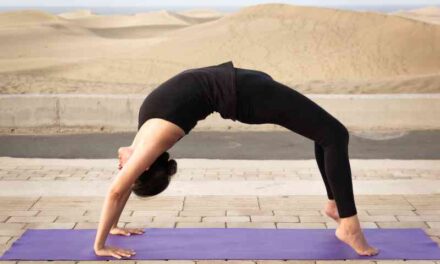
Biomechanics & Muscular Engagement: The gluteus maximus and hamstrings are the prime movers for hip extension. The quadriceps extend the knees. The adductors must engage to prevent the knees from splaying. Clasping the hands retracts the scapulae, opening the chest.
Method of Practice: Lying supine, knees are bent with feet flat on the floor, hip-width apart. Pressing into the feet, the hips lift. The shoulders roll under the back, and hands clasp. The practitioner presses the arms down to lift the thoracic spine. The knees must remain parallel.
Therapeutic Benefits:
- Thyroid Function: The chin-lock position (Jalandhara Bandha) compresses the throat, stimulating the thyroid gland and metabolism.
- Anxiety: A calming backbend that settles the nervous system, often recommended for insomnia.
6. Inversions
Inversions are the “Royal Poses” of Hatha Yoga. By reversing the flow of gravity, they aid venous return, lymph drainage, and alter cerebral blood flow, offering profound physiological resets.
6.1 Sirsasana (Headstand)
Sanskrit Etymology: Sirsa (Head) + Asana (Pose).
Biomechanics & Muscular Engagement: Despite the name, the weight is primarily borne by the forearms and shoulders (deltoids/trapezius), not the cervical spine. The core (obliques/rectus abdominis) and spinal extensors work intensely to stabilize the vertical alignment.
Method of Practice: The practitioner interlaces fingers to form a cup and places forearms on the floor, elbows shoulder-width apart. The crown of the head is placed on the floor, cupped by the hands. Hips lift (Dolphin pose), and feet walk in. Engaging the core, the legs lift—either tucked or straight—until vertical. The critical cue is to press the forearms down to lift the shoulders away from the ears, protecting the neck.
Therapeutic Benefits:
- Brain Health: Increases blood flow to the brain, hypothalamus, and pituitary gland, potentially improving cognitive function and hormonal balance.
- Circulation: Reverses the effect of gravity on the legs, aiding in the reduction of edema and varicose veins.
6.2 Sarvangasana (Shoulderstand)
Sanskrit Etymology: Sarva (All/Whole) + Anga (Limb) + Asana (Pose).
Biomechanics & Muscular Engagement: The pose relies on the strength of the spinal extensors and glutes to keep the body straight. The neck is in deep flexion. Caution: This pose places significant pressure on the cervical vertebrae C7; blankets should be used under the shoulders to preserve the natural cervical curve.
Method of Practice: From supine, legs and hips lift. Hands support the lower back. The practitioner walks the hands up toward the shoulder blades to straighten the torso. The chest presses toward the chin. The legs extend vertically. Crucial: The head must never turn in this pose to prevent neck injury.
Therapeutic Benefits:
- Metabolism: The intense throat compression stimulates the thyroid and parathyroid glands, regulating metabolism.
- Parasympathetic Activation: The chin lock triggers the baroreflex, lowering blood pressure and inducing deep calm.
6.3 Viparita Karani (Legs-Up-The-Wall)
Sanskrit Etymology: Viparita (Inverted) + Karani (Action).
Biomechanics & Muscular Engagement: This is a passive inversion. There is no muscular engagement. Gravity does the work of draining fluid from the legs.
Method of Practice: The practitioner sits sideways against a wall, then swings the legs up the wall while lying back. The buttocks should be close to the wall. Arms rest by the sides. The body remains here for 5–20 minutes.
Therapeutic Benefits:
- Recovery: The ultimate pose for fatigue, jet lag, and recovering from standing all day.
- Lymphatic Drainage: Facilitates the return of lymph fluid from the lower extremities, boosting immunity.
7. Arm Balances & Core
These postures build internal heat (Tapas) and require the integration of strength, leverage, and physics. They teach the practitioner how to lift their own weight, a metaphor for self-reliance.
7.1 Bakasana (Crow Pose)
Sanskrit Etymology: Baka (Crane/Crow) + Asana (Pose).
Biomechanics & Muscular Engagement: This is a lever system. The hands are the fulcrum. The abdominal muscles (rectus abdominis) must contract strongly to round the spine and lift the hips. The serratus anterior protracts the shoulder blades to create stability.
Method of Practice: Starting in a squat, hands place shoulder-width apart. Hips lift high. Knees are placed into the armpits or triceps. The practitioner leans weight forward into the hands. The critical moment is the “tipping point” where the head acts as a counterweight to the hips. One foot lifts, then the other. The gaze must remain forward to prevent somersaulting.
Therapeutic Benefits:
- Wrist Strength: Increases bone density in the wrists and forearms.
- Core Integration: Teaches deep abdominal control.
- Fear: Overcoming the fear of falling face-forward builds psychological resilience.
7.2 Vasisthasana (Side Plank)
Sanskrit Etymology: Named after sage Vasistha.
Biomechanics & Muscular Engagement: This pose targets the lateral chain: obliques, gluteus medius, and the vastus lateralis. The shoulder stabilizers (rotator cuff and serratus) work intensely to prevent the shoulder from collapsing.
Method of Practice: From Plank, the practitioner rolls onto the outer edge of the right foot and stacks the left foot on top. The left arm lifts. The hips push upward away from the floor. The supporting hand presses down firmly.
Therapeutic Benefits:
- Scoliosis: Asymmetrical strengthening of the quadratus lumborum can help address spinal curvature.
- Focus: Demands total body integration to maintain balance.
8. Restorative & Integration Asanas
The practice concludes with integration. These poses allow the body to assimilate the mechanical inputs of the session and return to homeostasis.
8.1 Balasana (Child’s Pose)
Sanskrit Etymology: Bala (Child) + Asana (Pose).
Method of Practice: Kneeling with big toes touching and knees wide, the practitioner sits the hips back to the heels and folds the torso forward, resting the forehead on the earth.
Therapeutic Benefits:
- Reset: Gently stretches the hips, thighs, and ankles.
- Mental Health: The fetal position triggers a primal sense of safety and comfort, reducing anxiety.
8.2 Savasana (Corpse Pose)
Sanskrit Etymology: Sava (Corpse) + Asana (Pose).
Method of Practice: The practitioner lies supine, legs mat-width apart, allowing feet to flop open. Arms are 45 degrees from the body, palms up. The goal is complete cessation of physical effort and withdrawal of the senses (Pratyahara).
Therapeutic Benefits:
- Integration: It is in Savasana that the benefits of the practice are “downloaded” into the nervous system.
- Repair: Deep rest state promotes tissue repair and immune function.
The Integrated Practice
The comprehensive analysis of these Hatha Yoga postures reveals a sophisticated system of physical culture that extends far beyond mere stretching. By intelligently sequencing these poses—moving from the stability of standing to the heat of arm balances, the release of forward bends, and the neurological reset of inversions—the practitioner engages in a holistic therapy. The agonist-antagonist relationships optimize muscular function, the visceral compression regulates endocrine health, and the focus on breath cultivates a resilient nervous system. Modern research continues to validate what the ancient yogis intuited: that the deliberate manipulation of the body is a powerful key to unlocking the health of the mind.
Summary Tables
Table 1: Agonist-Antagonist Relationships in Key Poses
| Pose | Primary Action | Agonist (Contracting) | Antagonist (Stretching) |
|---|---|---|---|
| Paschimottanasana | Hip Flexion | Quadriceps, Psoas | Hamstrings, Erector Spinae |
| Bhujangasana | Spinal Extension | Erector Spinae, Glutes | Rectus Abdominis, Psoas |
| Trikonasana | Knee Extension | Quadriceps | Hamstrings |
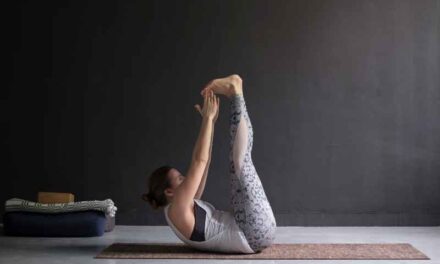
| Navasana (Boat) | Hip Flexion | Rectus Abdominis, Psoas | Erector Spinae |
Table 2: Contraindications & Modifications
| Pose | Contraindication | Recommended Modification |
|---|---|---|
| Sirsasana (Headstand) | High BP, Glaucoma, Neck Injury | Viparita Karani (Legs-Up-Wall) or Dolphin Pose |
| Sarvangasana (Shoulderstand) | Neck Injury, Menstruation | Setu Bandhasana (Bridge) with block under sacrum |
| Padmasana (Lotus) | Knee Injury, Tight Hips | Sukhasana (Easy Pose) or Half-Lotus |
| Chaturanga/Plank | Carpal Tunnel Syndrome | Forearm Plank or Knees Down |
| Twists (Deep) | Pregnancy (2nd/3rd Trimester) | Open Twists (e.g., twisting away from leg) only |